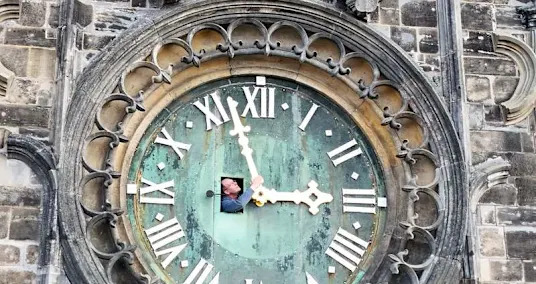
Clocks across the majority of European countries are set to go forward by one hour early on Sunday as the continent moves to daylight saving time, also known as summer time.
Clocks in most European nations including Germany advance by one hour at 2 am (0100 GMT) to 3 am, heralding longer evenings and brighter days.
This means that for the coming months parts of Europe will be on Central European Summer Time (CEST), before moving back to Central European Time (CET) in the autumn, when clocks go back again by an hour on October 25.
The aim of the change is to make better use of daylight in the shorter days of the winter in the northern hemisphere.
The signal for the automatic changeover of the clocks in Germany comes from the Federal Institute of Physics and Metrology (PTB) in the northern city of Braunschweig, also known as Brunswick in English.
The institute's experts ensure that radio-controlled clocks, station clocks and many industrial clocks are supplied with the signal via a long-wave transmitter called DCF77 in Mainflingen near Frankfurt.
LATEST POSTS
- 1
 Favored Vehicle for Seniors: Make Your Determination
 - 2Gulf countries continue to face Iran attacks as criticial energy infrastructure at risk
- 3Nordic people know how to beat the winter blues. Here's how to find light in the darkest months
- 4Germany and trade unions kick off tough public-sector wage talks
- 55 Pizza Fixings That Characterize Your Character




- Becoming the best at Discussion: Individual Procedures
- 'Israel has the right to continue its attacks,' Lebanese Foreign Minister announces
- A Sweet Choice: Pick Your #1 Cake!
- Purchases of iPhone 17 Pro soar across Gaza amid 'limited' humanitarian aid
- Early Thanksgiving week forecast: Where Americans can expect cold, rain and snow for the holiday
- U.S. overhauls childhood vaccine schedule, recommends fewer shots
- UPM Adhesive Materials plans new facility near New Delhi, India
- Lego's $650 Pokémon set is already sold out as demand, preorders surge
- Spain's Easter processions draw more tourists amid Iran war