When you buy through links on our articles, Future and its syndication partners may earn a commission.

Astronomers have observed a strange but powerful supernova explosion that not only marked the death of a massive, highly evolved star, but also may have heralded the birth of a pair of binary black holes.
The team behind this discovery studied the supernova explosion SN 2022esa with the 8.2-meter Subaru telescope located at the Mauna Kea Observatory in Hawaii and the Seimei telescope in Japan.
They found the supernova was likely the result of the explosive death of a massive, hot, luminous star at the end of its evolutionary development, known as a "Wolf-Rayet star." This star dwelled in the galaxy 2MFGC 13525, located around 320 million light-years away from Earth.
The scientists discovered that SN the supernova demonstrated a clear and stable period lasting around a month, which led them to theorize that it was the result of periodic eruptions in this system, one each Earth-year before the final explosion.
That kind of stable periodicity is only possible in a binary system, the researchers say, indicating this doomed Wolf-Rayet star was partnered by either a black hole or a massive star that will one day explode to birth a black hole. The end result in both cases is a black hole binary.
"The fates of massive stars, the birth of a black hole, or even a black hole binary, are very important questions in astronomy," team leader Keiichi Maeda of Kyoto University said in a statement. "Our study provides a new direction to understand the whole evolutionary history of massive stars toward the formation of black hole binaries."
The team's findings don't just reveal more about binary black holes and their origins; they also demonstrate the power of teaming two different telescopes with different capabilities. The Seimei telescope brings flexibility and rapid response times to this tag-team, while Subaru provides its high-sensitivity.
As a result, these telescopes are likely to remain teamed for years to come.
"We expect many interesting discoveries on the nature of astronomical transients and explosions like supernova," Maeda said.
The team's research was published in November in Physical Review Letters.
LATEST POSTS
- 1
 Step by step instructions to Keep up with the Life span of Your Kona SUV's Battery Duration
 - 2Figure out how to Arrange a Fair Settlement with the Assistance of a Fender bender Legal counselor
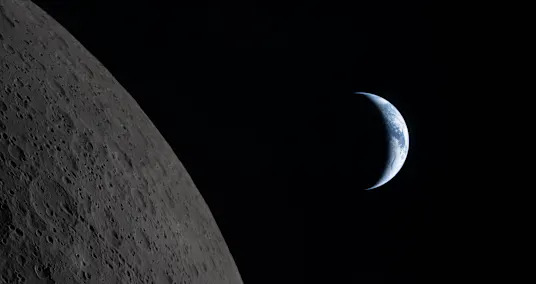
- 3NASA releases stunning new images captured by the Artemis II moon mission, including 'Earthset' and a solar eclipse from space
- 4Scientists detect X-ray glow from interstellar comet 3I/ATLAS extending 250,000 miles into space
- 5New science points to 4 distinct types of autism




- Katz alleges Army Radio workers misled High Court in bid to halt closure
- The Best Music Collections of the 10 years
- Quandoo to shut restaurant booking platform by end of 2026
- First Greenland, now Iceland? Annexation joke by Trump ally gets frosty response in the Arctic nation.
- Trump awarded 1st FIFA Peace Prize by Gianni Infantino at 2026 World Cup draw
- Manual for Famous people Known for Their Altruistic Endeavors
- IDF, police arrest eleven for criminal, terror-related activity over weekend
- Cheetah, Hammerhead Shark, and 38 Other Animals in Danger of Extinction Receive New International Protections from U.N.
- Vote In favor of Your Favored Kind Of Bites